Brazilian Carnival: The Complete Guide for Foreigners
title: "Brazilian Carnival: The Complete Guide for Foreigners"
Brazilian Carnival: The Complete Guide for Foreigners
Carnival is the largest festival on Earth. Every year, millions of people take to the streets of Brazil for days of music, dancing, costumes, and celebration. But Carnival is far more than just a party — it's a cultural institution with deep roots in Brazilian identity. Here's everything you need to know to experience it like a local.
When Is Carnival?
Carnival happens every year in February or March, always 40 days before Easter. It officially runs from Friday to Ash Wednesday (the following week), but the biggest events are Saturday through Tuesday — known as the four main days.
2026 dates: February 14–18 (Saturday through Fat Tuesday)
The country essentially shuts down during Carnival. Banks, government offices, and most businesses close. Many Brazilians take the entire week off.
Where to Celebrate
Rio de Janeiro — The Spectacle
Rio's Carnival is the most famous in the world, and for good reason. It has two distinct experiences:
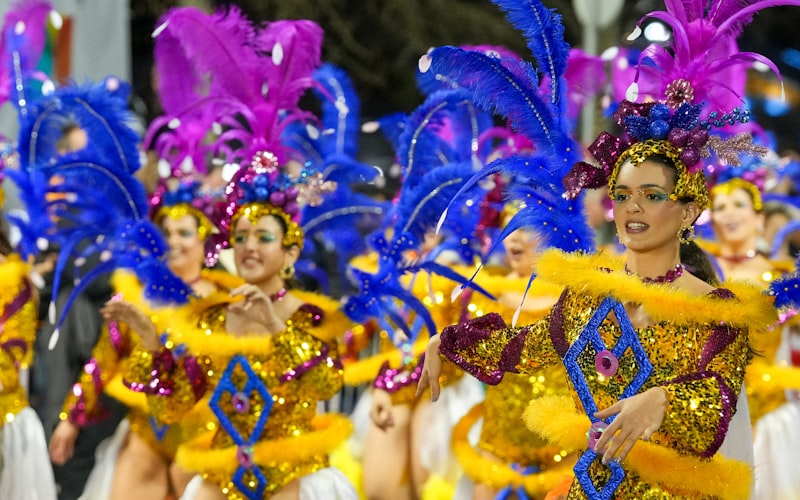
The Sambadrome parade: The top-tier samba schools compete in the Sambódromo, a purpose-built parade venue. Each school has 3,000–5,000 members with elaborate floats, choreography, and costumes. The competition runs Sunday and Monday nights. Tickets range from R$100 (bleachers) to R$5,000+ (premium boxes).
Street blocos: The real heart of Rio's Carnival. Over 500 free street parties (blocos) happen across the city during Carnival week. Each bloco has a band on a truck followed by thousands of dancing people. Famous blocos include Cordão da Bola Preta (downtown, 1+ million people), Sargento Pimenta (Beatles songs in samba style), and Bloco da Preta (Preta Gil's party in Ipanema).
Tips for Rio:
- Book accommodation 3–6 months in advance — prices triple during Carnival
- Blocos are free and require no reservation — just show up
- Sambadrome tickets sell out fast — buy through the official LIESA website
- Wear a costume or at least colorful clothes — locals go all out
- Keep your phone in a waterproof pouch or fanny pack
Salvador — The Street Party Capital
Salvador's Carnival is arguably the most intense and participatory. The entire city becomes a non-stop street party for a full week.
How it works: Massive trucks (trios elétricos) with powerful sound systems slowly drive through circuits while bands play on top. Thousands of people follow each truck, dancing and singing. There are three main circuits: Campo Grande, Barra-Ondina, and Pelourinho.
Abadás: For some circuits, you buy an "abadá" (a themed t-shirt that serves as your ticket) to follow a specific trio elétrico inside a roped-off area. Abadás cost R$500–2,000 depending on the artist. Outside the ropes (pipoca) is free.
Tips for Salvador:
- The music is predominantly axé, pagode, and Bahian genres — learn some songs beforehand
- Salvador's Carnival runs for a full 7 days — pace yourself
- The Pelourinho circuit is the most culturally rich, with Afro-Brazilian blocos like Olodum and Ilê Aiyê
- Stay hydrated — Salvador is hot and humid during Carnival
Recife and Olinda — The Cultural Experience
The twin cities of Recife and Olinda in Pernambuco offer a more traditional, cultural Carnival experience. The music here is frevo (fast-paced brass music) and maracatu (Afro-Brazilian drum rhythms).
Highlights:
- Galo da Madrugada in Recife — the world's largest Carnival bloco, with over 2 million people
- Olinda's Carnival — giant puppet parades (bonecos gigantes) through colonial streets. More intimate and artsy than Rio or Salvador
- The music and dance styles are unique to Pernambuco and deeply connected to local history
Tips: Olinda's hilly cobblestone streets require comfortable shoes. Accommodation is limited — many people stay in Recife and take a bus or taxi to Olinda.
São Paulo — The Growing Alternative
São Paulo's Carnival has exploded in popularity over the past decade. The city now has over 600 blocos and its own Sambadrome competition (with free admission to the stands).
Why São Paulo: Less chaotic than Rio, easier to find last-minute accommodation, and the blocos are spread across many neighborhoods. The Vila Madalena neighborhood is the epicenter of SP's street Carnival.
What to Wear
- Costumes are encouraged — from simple face paint and Hawaiian shirts to elaborate full-body ensembles. Creativity is celebrated
- Comfortable shoes — you'll be walking and dancing for hours on hot pavement
- Avoid heavy costumes — temperatures often exceed 35°C during Carnival
- Glitter is everywhere — embrace it (biodegradable glitter is appreciated)
- Bring a fanny pack or crossbody bag — keep your essentials (phone, money, ID) secure and hands-free
Safety During Carnival
Carnival is generally safe, but the sheer crowd size attracts pickpockets.
- Carry minimal cash and use PIX or a single credit card
- Don't bring expensive cameras, watches, or jewelry
- Use a waterproof phone pouch around your neck
- Stay with your group — it's easy to get separated in massive crowds
- Hydrate — the combination of heat, alcohol, and dancing leads to dehydration. Drink water between every alcoholic drink
- Plan your return route — metro and buses run extended hours during Carnival, but ride apps can have long wait times and surge pricing during peak bloco hours
- Consent matters — Carnival is celebratory and physical, but touching someone without consent is not acceptable. Respect boundaries
Budget Guide
| Item | Rio | Salvador | Recife/Olinda | |---|---|---|---| | Accommodation (per night) | R$300–1,000+ | R$200–800 | R$150–500 | | Sambadrome ticket | R$100–5,000 | N/A | N/A | | Abadá (Salvador) | N/A | R$500–2,000 | N/A | | Food/day | R$80–150 | R$60–120 | R$50–100 | | Daily expenses | R$100–200 | R$80–150 | R$60–120 |
Street blocos are free everywhere — you can experience an incredible Carnival on a backpacker budget by attending blocos, eating street food, and staying in hostels.
Essential Carnival Vocabulary
- Bloco — a street party group with a band and followers
- Trio elétrico — sound truck (Salvador-style)
- Abadá — the t-shirt ticket for paid circuits in Salvador
- Pipoca — "popcorn" — the free area outside the roped sections
- Samba-enredo — the theme song of a samba school for that year's parade
- Escola de samba — samba school (the organizations that compete in the Sambadrome)
- Enredo — the theme/narrative of a samba school's parade
- Confete — confetti
- Serpentina — streamers
Carnival is one of those experiences that simply cannot be replicated anywhere else. Whether you choose Rio's spectacle, Salvador's intensity, or Olinda's charm, you'll understand why Brazilians count the days until the next one.